Skip to content

Good Life / Sebastian Salin

Let's think
it through.

I want time for friends, my own projects, nature, and long conversations. A life that feels meaningful and a bit wondrous. I spend quite a lot of time figuring out how to get there.

Writing helps. Walking helps. Talking with someone who gets interested in the question helps. I like being that person for others, too.
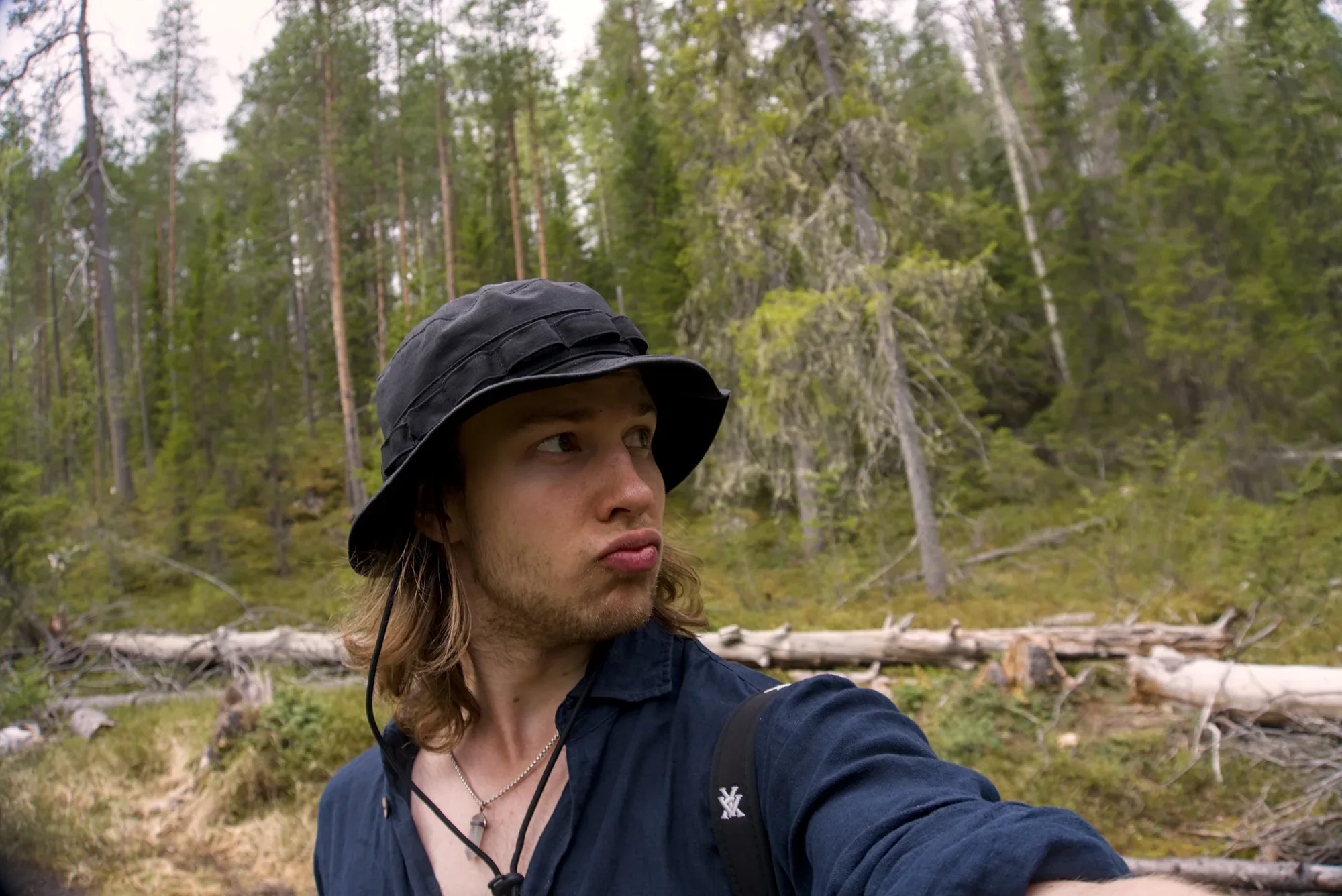
Sebastian wearing a black sun hat in a forest

01My story

Learning how to be me.

The biggest change was how I understood myself. My notes are full of the smaller moments around that change: a cabin trip, instructions to myself, and attempts to make tomorrow a little easier.

A cabin, bad internet, and coming homeAn ordinary weekend made the contrast hard to miss.

In April 2025 I came home from a few days at a cabin. I'd worked outside, played board games with my siblings and gone to the sauna. The internet barely worked. I hadn't even opened my laptop. And, somewhat to my surprise, I wasn't suffering from boredom.

That same evening, back home, I was playing League of Legends and scrolling TikTok. I hadn't made any progress on sorting out my room. There was supposedly no time. But I could see where the time was going.

At the cabin I'd enjoyed being outside, eating good food and talking with my family. I wanted room for those things in everyday life, too: friends, my own projects, nature, and time to think.

In my diary that night, I tried to put into words what I wanted. I didn't want a dull life held together by willpower. I wanted to change my surroundings so they would help me live well.

I want to be the architect of my own life.

From my journal, April 2025 · translated from Finnish

The biggest change was my mindset.

I used to see myself as a person with a disease. Now I see someone who has been misunderstood, with some superpowers and some difficulties fitting into the mould society wants us to fit.

By Sebastian, for SebastianHow my notes became a slightly chaotic instruction manual.

One of my early notes was called Life's Truths. Very modest. The idea was to record recurring situations, step outside the main-character view of my own life, and leave myself something useful for the next time.

I later wrote that there were rather a lot of these truths, and that a less grand title would probably do. Another page became A Messy List of Tricks. That feels about right.

Some entries are philosophical. Some are about putting a laundry bag in the bathroom so that starting the laundry is one step easier. They're both attempts to understand the same person.

Writing also changes the thought. Something can float around in my head for ages, but explaining it in Finnish or English makes me work out what I mean. My notebook gives the thought somewhere to go. A good conversation can do that too.

And hey, I'm proud of you.

A note to myself in Life's Truths · translated from Finnish
Tomorrow's SebastianA small favour for the next version of me.

I have a playful way of thinking about my future self: a different Sebastian shows up each morning. Today's Sebastian only has to live today, but he leaves tomorrow's Sebastian a body, a room, some relationships, and whatever is in the fridge.

It makes a large goal easier to hold. Building strength over two years is rather abstract. Doing a small amount today is something today's Sebastian can understand.

And if today's Sebastian is exhausted, his contribution might be resting. The point is to give the next one a decent chance. I like that this idea has room for both effort and care.

It also explains why I write instructions when things are going well. I want them to be useful on the days when I have less energy, less clarity, or very little enthusiasm for instructions.

02Connected ideas

The same patterns, everywhere.

A habit, a friendship, a game, a piece of software. I keep finding familiar patterns in different places. My notes are full of links because that's how I make sense of things: one idea helps me see another.

Follow one idea a little furtherSmall starts, open doors, and a walk that does several jobs.

The interesting bit is often two links away. I start with a practical question, borrow an idea from somewhere else, and find that it changes how I look at the original problem. Here are three connections I draw across my notes.

  1. A small start
  2. A good ending
  3. Wanting to return

My bite-sized note connects easy beginnings with the feeling an activity leaves behind. A short workout or visit can leave me wanting another. That gives me a different way to think about consistency: make returning inviting.

  1. The room
  2. The available choices
  3. The direction of a life

An open game is an easy door to walk through. A fruit bowl offers a different invitation. My notes about surroundings, friction, and life's doors are different pictures of the same question: what am I making easy for myself?

  1. A walk
  2. A conversation
  3. Feeling connected

In my note about making choices, I suggest adding a friend and philosophy when exercise doesn't appeal. Suddenly the walk has several reasons to happen. Movement, friendship, and thinking can fit into the same hour.

Maps, spoons, and an elephant in sandalsWhy I like analogies, and why I keep revising them.

I think we do a lot of our understanding through familiar patterns. A new situation becomes easier to grasp when there's something to connect it to. I enjoy finding the comparison that makes an idea click for someone.

In one note I imagined a spiky elephant in sandals. Even something that ridiculous is made from familiar pieces: spikes, sandals, an elephant. I like the thought that creativity can come from making new connections between things we already know.

Another note borrows from factory production. Imagine making 1,000 spoons with a few defects, compared with making only 100 while chasing perfection. I used that as a way to think about exploring ideas: an imperfect first model can give me something useful to develop.

But a model simplifies. In my map-of-life note, I question whether reading 52 books quickly is necessarily better than reading one slowly. A number can be easy to count while missing what I cared about.

So I collect perspectives, compare them, and change them when experience disagrees. The map helps me navigate. I still need to look at where I'm standing.

An axe on the wall, and other useful picturesA few mental models I keep bringing back into daily life.

Kirves seinällä means an axe on the wall. It's my name for how the things around us can influence what we do. A bag of crisps on the table is an instruction to eat. That's how I put it in my notes. I try to put things nearby that encourage the kind of life I want.

Life's doors is a related picture. I can open a possibility a little without committing to walk all the way through. Looking up a hobby, asking someone about their work, or trying one session can be enough for a first step.

Then there's the reverse golden rule: don't do to yourself what you wouldn't want done to someone else. If I wouldn't beat a friend up over a mistake, why do it to myself?

And everything can be an experiment. Try something small, notice what happens, and decide what to change. I find that much easier to work with than needing a complete plan for the rest of my life.

03A good life

What goes into a good day?

Find one thing that always seems to make your day better. For me, it's probably a walk in nature and someone interesting to talk to. It sounds obvious once I say it. Somehow, it wasn't.

The things we forget make us feel betterA walk for me. Yoga for a friend. What is it for you?

I'm realising that a walk in nature, with someone interesting to talk to, is probably one of my things. I should be doing this more. Like, every day.

For one of my friends, it seems very clearly to be yoga. From the outside, I can see the pattern. Yet recognising my own version of it has been surprisingly difficult.

It's strange how hard it can be to realise what makes you feel better. Sometimes you need someone else to notice it with you. That's one reason I care about these conversations: we can help each other see something that's been there all along.

Food, movement, people, meaning, understanding myself. These are the parts of a good life I keep exploring. I want to notice what actually helps, then make a little more room for it.

Food that takes care of the humanNutrition, micronutrients, and Foody.

I care about what's in my food. Calories and protein are part of it; I'm curious about the vitamins, minerals, fibre, and variety too. What am I getting enough of? What am I overlooking?

I like asking what food makes sense for a human body. The thought of eating things humans are meant to eat is appealing to me. I use that as a starting question, alongside evidence about nutrition and attention to what works for me.

Foody is one way this interest meets my product-engineering side: a food diary for meals, nutrients, and small changes over time. It's a public prototype, and a concrete example of turning something I care about into a tool.

My notes also contain much less glamorous food wisdom: leave enough for breakfast and lunch. I like that advice. It connects nutrition to making tomorrow easier, and to having fewer decisions to wrestle with when I want to get on with my day.

  1. Nourishment
  2. Fewer daily decisions
  3. Room for other things

The food itself matters. So does making it easy to feed myself well on an ordinary day.

Explore Foody (opens in a new tab)
Small enough to repeatMovement, momentum, and the long game.

I like the idea that a little effort, repeated over days and weeks, can turn into something substantial. The interesting design problem is making the small version easy enough to do.

My note about starting difficult tasks gets almost comically specific: move the laundry bag to the bathroom. Put five items in the machine. For movement, the equivalent might be getting outside for a short walk. Give the first step a sensible size.

There's a real example in my journal from March 2025. I'd barely left home for a few days and was finding reasons not to go to university. I ended up walking there with a friend, and wrote that getting out was surprisingly enjoyable.

I called walking the king of activities. I still like its range: some movement, something to look at, time to think, and often a long conversation. It can be a very ordinary way to make a day better.
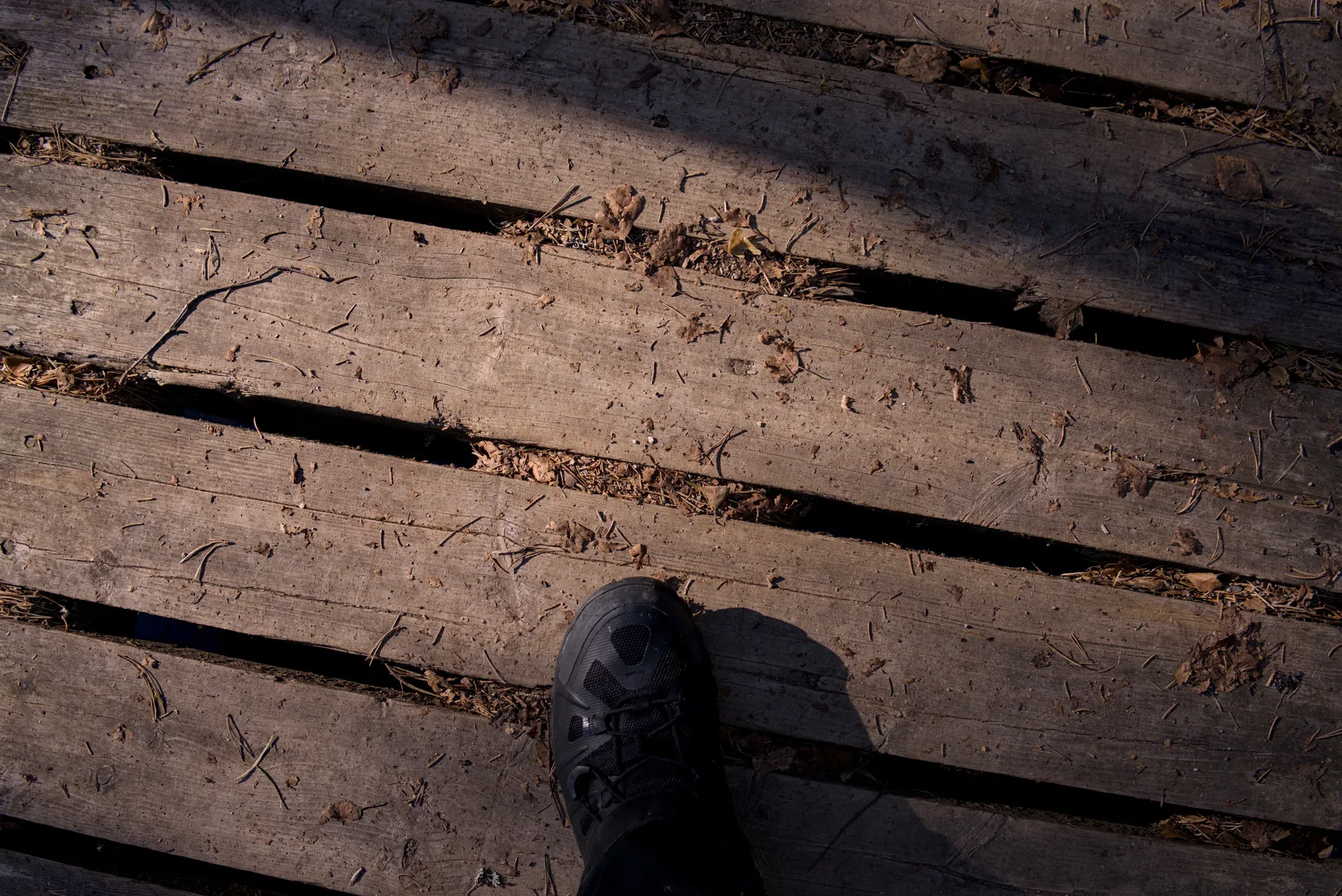
A hiking boot on weathered wooden duckboards in warm light
Would a caveman enjoy this?A human animal, a desk, and a concrete building.

This is one of the lenses I use to navigate life. Imagine taking a human with a long history of moving around with other people, then sitting him alone at a desk inside a concrete building all day. Would I expect that setup to make him happy?

My imaginary caveman would probably want movement, a group, some daylight, and something meaningful to do. Fair enough. I want those things too.

It's a rough thought experiment about the kind of creature I am. When a day feels wrong, it gives me practical questions: have I moved? Have I been outside? Have I seen anyone? Is there anything here that matters to me?

And it connects back to the cabin. The things I enjoyed there were wonderfully ordinary. I want to make room for more of them in modern life.

Tend the gardenMental well-being, self-kindness, and rest.

In April 2025 I wrote a little prose poem about a garden. Happiness was a butterfly. I could chase it around, or I could take care of a garden it might want to visit.

What I like most about the picture is that the garden still deserves care when the butterfly isn't there. A difficult day doesn't make the care pointless. I don't want to judge my whole life by how I feel this afternoon.

This is where my interest in mental health meets philosophy: how I relate to my feelings, the stories I tell about myself, and whether I can respond with some kindness. I borrow ideas from Zen, Stoicism, and Taoism when they help me understand an ordinary situation.

Rest belongs here too. Tomorrow's Sebastian needs looking after. Sometimes the useful next step is a smaller expectation, a quiet evening, or a conversation where I can say how things really are.

The momentary outcome does not determine the gardener's worth or skill.

From my poem The Garden of Life, April 2025 · translated from Finnish
Whose good life is it?Values, identity, and the person you want to become.

Who are you? What do you want? What matters to you, and what have you mostly learned to want because everyone around you seems to want it? What kind of person would you like to become?

I enjoy these questions because the answers affect very practical things: the work you choose, the people you spend time with, and what you make room for on a Tuesday.

In one exercise I mapped my own values. I kept coming back to lasting contentment, meaning, well-being, understanding, and self-acceptance. I also wrote that my values change, and that I can't ever describe them perfectly. The map needs updating.

I'd like to explore that with someone: what already fits, what feels borrowed, and what a small step towards their own values could look like. The answer might be a career change. It might also be protecting one evening for something they love.

People, play, and something worth doingBelonging, curiosity, hobbies, and meaningful work.

The cabin wasn't just a place with bad internet. There were people around, board games, conversations, and things to do together. That mattered.

I care about finding people with whom I can be curious and a bit ridiculous. I also care about having something to get absorbed in: a project, a hobby, an interesting problem, or a conversation that goes somewhere unexpected.

That shows up in what I build, too. Hide Tag is a game about getting outside with friends. Foody comes from wanting to understand food. My projects and my ideas about a good life keep meeting each other.

When I think about helping someone, I'm interested in the whole setting. What kind of work would feel satisfying? Where might they find their people? What could they try for the pleasure of it?

04Thinking together

What would help you?

We can talk about work, a decision you keep circling, or wanting more from your everyday life. I'll ask questions, check that I understand, and help you find something useful to try.

What a conversation could look likeQuestions, listening, and room to think aloud.

What do you want? What are you assuming you have to do? Which parts of your life feel good already? I try to check that I've understood before offering a perspective of my own.

I can get excited and want to say my thought before the other person has finished. One wonderfully silly trick from my notes: keep a thumb raised to remember the thought, and carry on listening. I call it peukkuglitch. A thumb has surprisingly good storage capacity.

I've also had to remind myself to let deep conversations emerge. They don't need to be forced. Sometimes a conversation can just be a conversation.

Sometimes encouragement helps. Sometimes it's being taken seriously, an explanation, or a practical suggestion. I want to find out what would be useful to the person in front of me.

Something small to tryJointly chosen homework, if you like.

I'd like us to choose a small experiment together: a conversation with someone in a field you're curious about, one session of a new hobby, or an evening made deliberately less busy.

Then we talk about what happened. Was it enjoyable? What got in the way? Did it reveal something you hadn't expected? We can adjust the next step around what we learn.

This is the part where a philosophy has to meet an actual week. An idea becomes much more interesting to me when we can do something with it.

My experience so far is informal mentoring. I'm exploring how to bring more of this into my work.

05A real example

An application. Then silence.

A friend hadn't heard back after applying for a job. I encouraged her, and we talked through possible ways she could follow up.

She told me she felt unusually accepted, supported and cared for.

Her feedback, paraphrased. The conversation is shared anonymously.
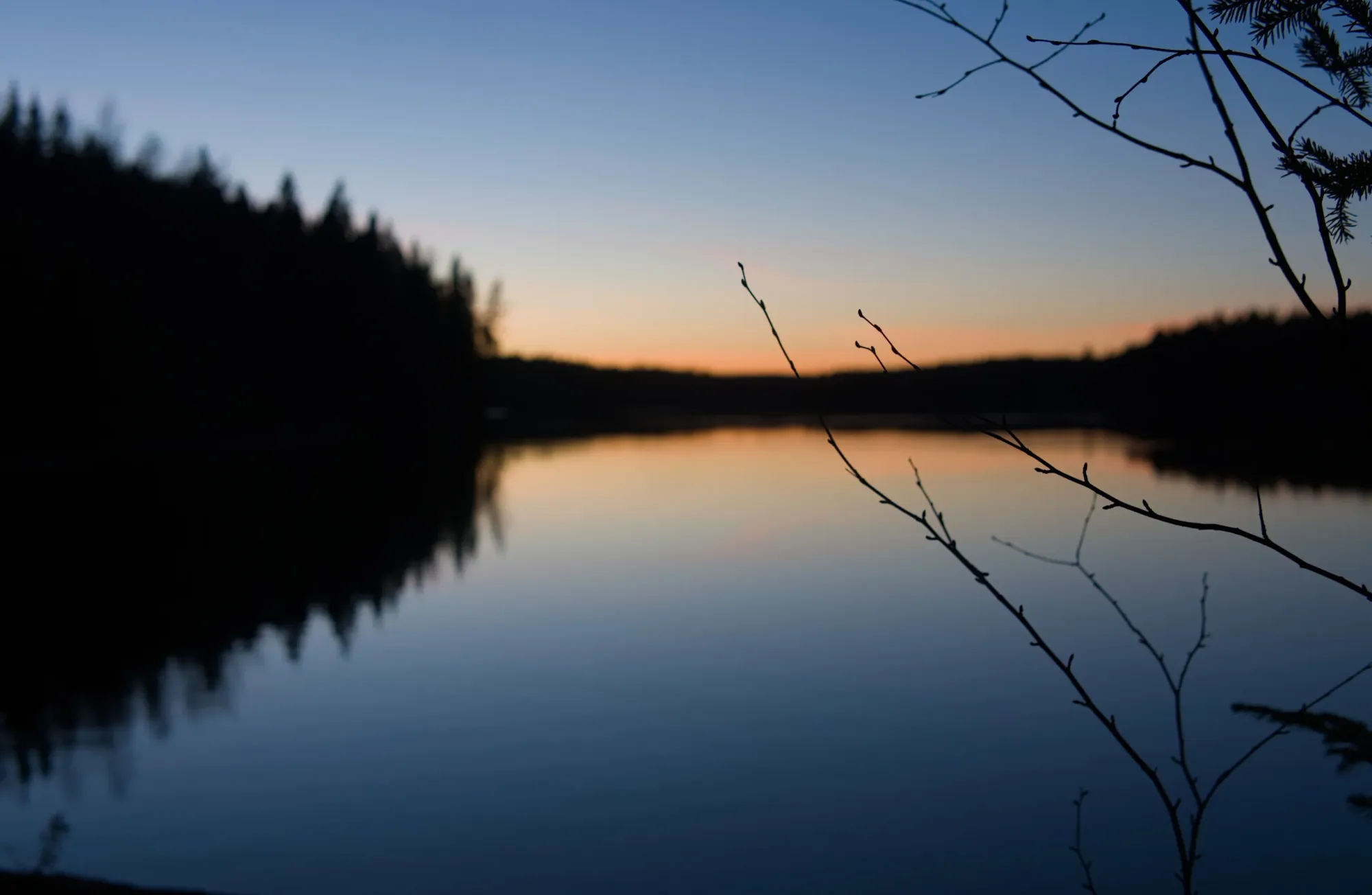
A still lake at blue hour, with branches silhouetted against a pale orange horizon

Start with a conversation

What's on your mind?

Tell me what you're trying to figure out. A few unfinished thoughts are enough to start with.

Let's talk
LET’S TALK

Hey, shoot me a message
about ANYTHING :)

Pick whatever feels easiest.

Emailsebastian.salin@gmail.comTelegram@opiskelija (opens in a new tab)LinkedInSebastian Salin (opens in a new tab)Discord@gceb (opens in a new tab)